
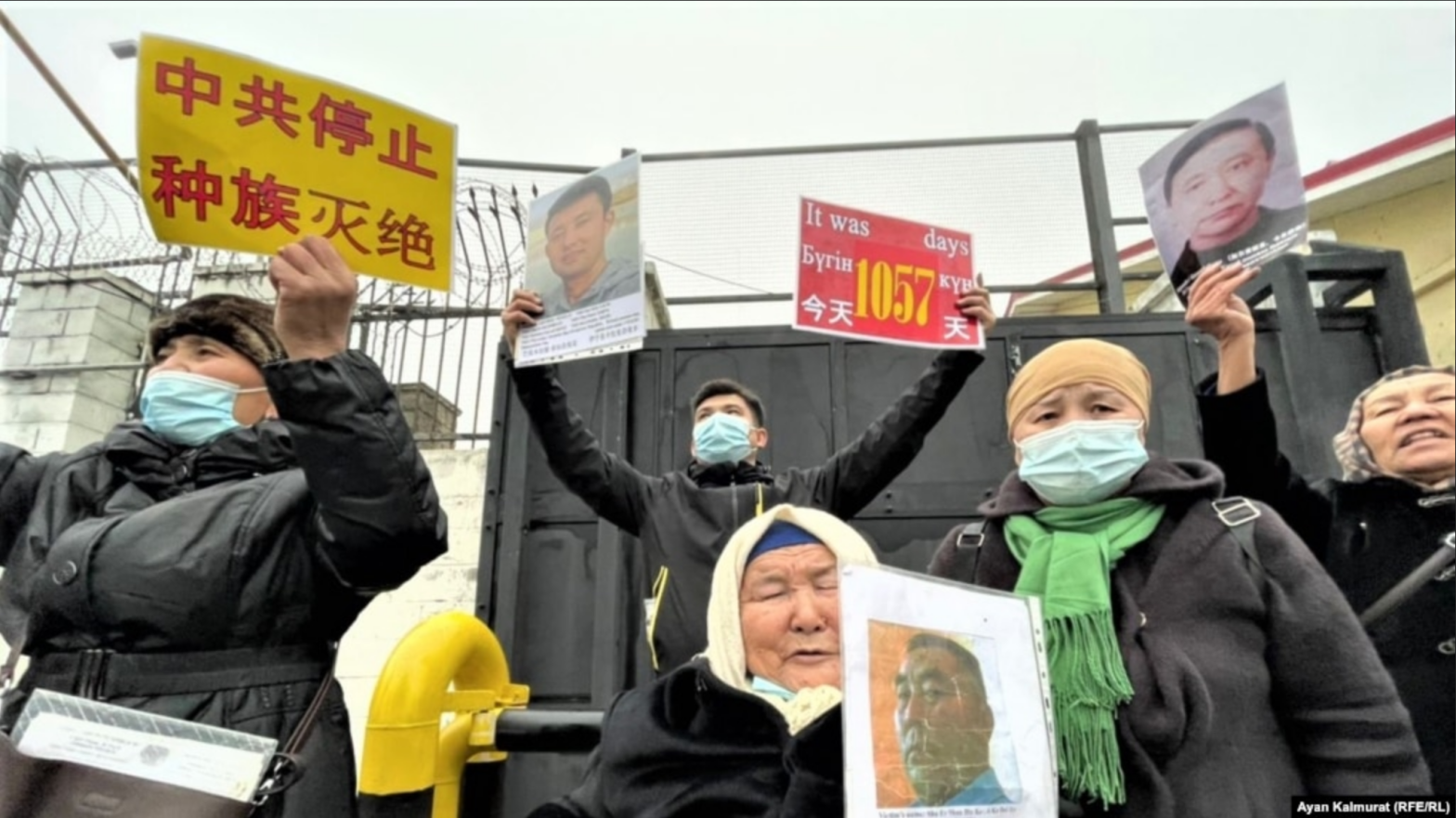
Despite seeking asylum in Kazakhstan, refugees from Xinjiang also consider the country dangerous. Ethnic Kazakhs and Uyghurs do not stay in Kazakhstan for long and look for ways to leave.
Category: Kazakhstan
Prominent businessman, survivor of Xinjiang’s mass incarcerations, given 8 years in Kazakhstan

Esbol Muqamadan, a successful Kazakh entrepreneur and previously a victim of the mass incarcerations in Xinjiang, is now serving an eight-year prison sentence in his historical homeland – a verdict that he claims is partially due to political interference by the Chinese authorities.
Detentions, arrests, fines: Three years of protests in front of the Chinese consulate

68-year-old Qalida Aqythan is among those who have been regularly participating in the protests outside the Chinese consulate in Almaty for the past three years. She has a compelling reason not to stop fighting: three of her children are in Chinese prison.
“Afraid of demons in my dreams? I’m used to them now, as I’ve seen them in real life.”

“There is nothing that I can do to prevent them from doing what they need to do. But if I disappear or if I die, I want the world to hold them responsible. To ask what happened to me, to know that I didn’t die a natural death. Many people should know about this, about what has happened to me. The world should know!”
“Here on featherweight rights, with relatives in Xinjiang pressured”: The fates of those who fled China

A few years ago, ethnic Kazakhs Qaisha Aqan, Qaster Musahan, and Murager Alim, fearing persecution in Xinjiang, fled China and illegally crossed the Kazakhstan border. This year marks their third living on refugee certificates, as Astana is neither granting them citizenship nor issuing the travel documents necessary to relocate to a third country.
“The camp broke me – spiritually, materially, and physically.”

The following is a translation of a first-person eyewitness account from Zhazira Asen, a businesswoman and writer who spent a year and a half in camp.
“Those were times when speaking the truth had serious consequences.”

In 1944, while studying in the city of Urumqi, Qazhygumar Shabdan was accused by the Chinese authorities of participating in an ethnic-minority uprising and sent to prison. That became the first of the prisons in which he would end up spending half of his life.
“My legs hurt, and one leg is almost paralyzed. They are killing me like this. I beg for your help.”

The following is a translated transcript of a series of videos released by Aimurat Erzhuman in 2022, from Xinjiang, in a desperate attempt to convey his situation to the world outside.
They called us the “terrorist family”

My name is Gulnar Omirzaq. I’m from Chapchal County – a village called Termenbulaq, in Segizsumyn. I’m going to share everything that happened to me and other members of minority groups that live in China. I am one of the people who witnessed these things.