
The following is an English translation of a Radio Azattyq report by Nurtai Lakhan, originally published in Kazakh and Russian in November 2021.
Also available in (external links): русский, қазақша
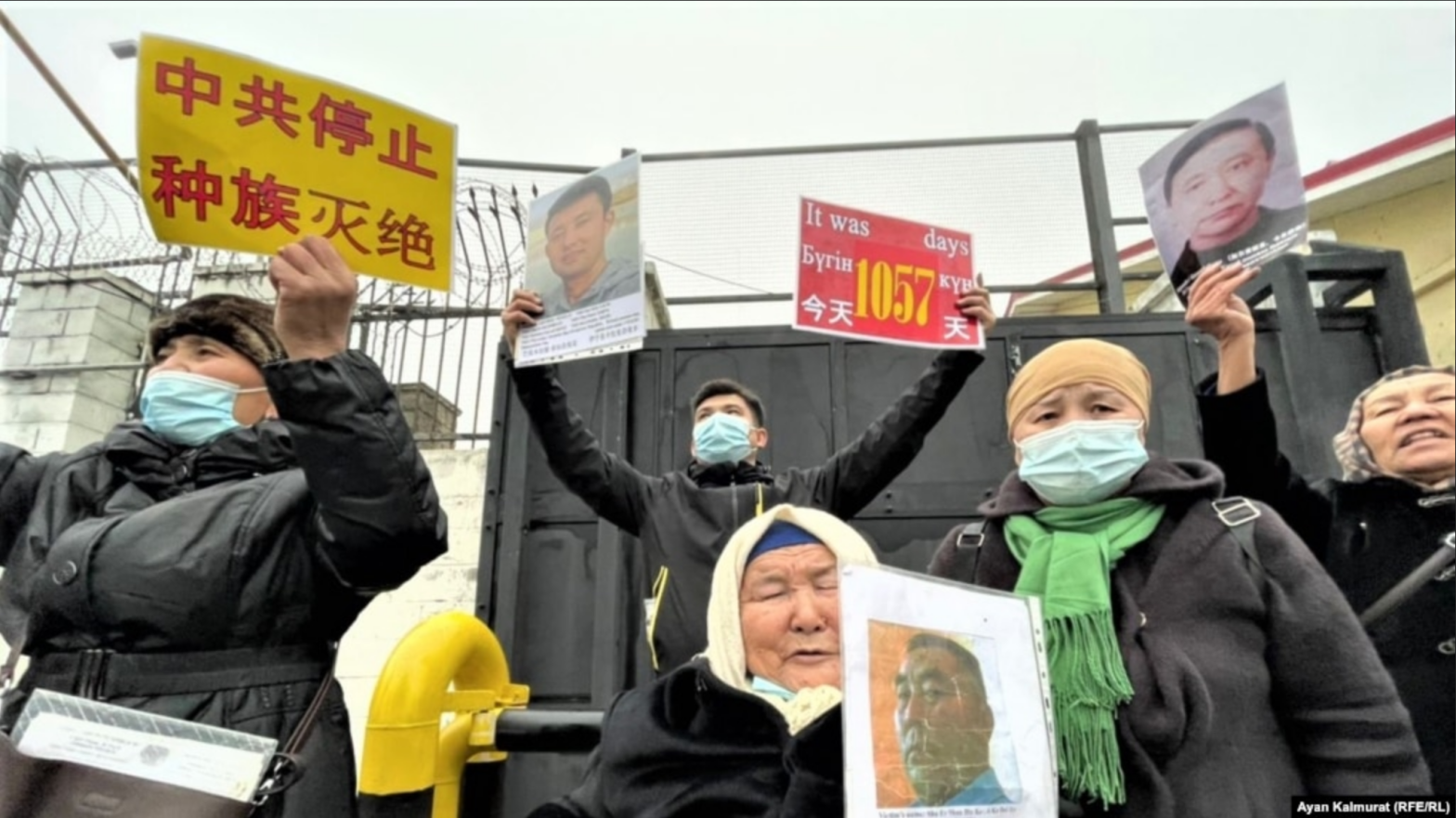
Despite seeking asylum in Kazakhstan, refugees from Xinjiang also consider the country dangerous. Ethnic Kazakhs and Uyghurs do not stay in Kazakhstan for long and look for ways to leave – for Europe, Turkey, and the United States. Experts say that Kazakhstan fears China’s influence and cannot fully protect those fleeing from Xinjiang.
Ethnic Uyghur Gulbahar Jelilova, who claims to have been in a camp in Xinjiang, now lives in Istanbul. A native of Kazakhstan, she returned to her homeland after leaving the Xinjiang camp, but was forced to flee to Turkey for security reasons. When asked why she was afraid to stay in her homeland, Gulbahar replied that “Kazakhstan cannot” protect her.
“I was born in the Uyghur district of Almaty Region,” she says. “In 2017, when I went to Urumqi on business, the Chinese police detained me at my hotel. They destroyed my Kazakhstan passport and gave me a fake ID, stating that I was a Chinese citizen. I spent five months in a camp in shackles that weighed five kilograms [editor: it was not possible to verify our protagonist’s words through independent sources]. I was afraid to stay in Kazakhstan. Because when I was released, the Chinese authorities said that if I spoke about what I saw in camp, they would find me anywhere. That’s why I left for Turkey, leaving behind my family and relatives.”
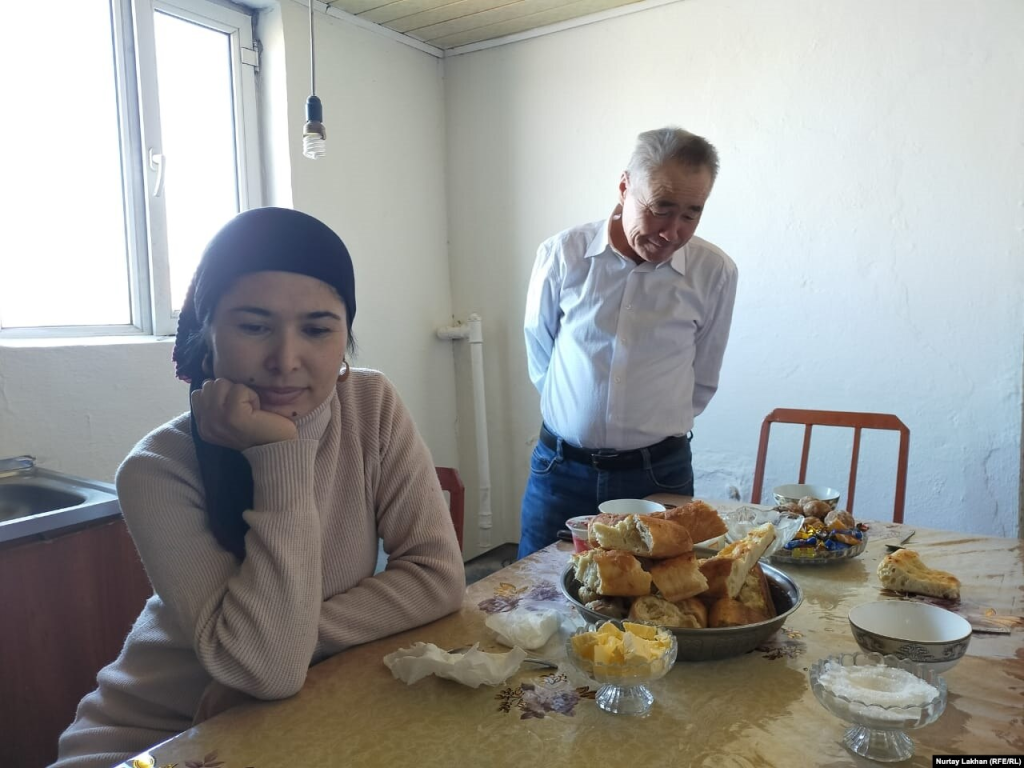
Tursunay Ziyawudun, an Uyghur woman who in 2019 returned to her family in Kazakhstan after being released from a camp in Xinjiang, now lives in New York. She also reported being unable to obtain Kazakhstan citizenship. While she was living in Kazakhstan, unknown individuals set her shed on fire. Some time after this incident, she relocated to the United States.
“Kazakhstan is a dangerous country for those who expose China’s crimes,” she says. “The authorities of Kazakhstan will never be able to protect such citizens.”
“THERE IS NO OTHER WAY EXCEPT TO LEAVE FOR TURKEY”
Obulqasim Ismayil, an Uyghur originally from China who now lives in Pavlodar, is also thinking about relocating to Turkey. Obulqasim and his wife work as cooks in one of the city’s cafes. On October 10 [recte: November 10], they were informed at the migration service of the Nur-Sultan police department that their residence permit was no longer valid.
Obulqasim has a copy of a letter sent by the migration service of Nur-Sultan to the migration service of Pavlodar. It states that “the migration service of Nur-Sultan granted Obulqasim Ismayil a residence permit on the basis of an expired visa”. The employees of the migration service and the district police department of Nur-Sultan who were deemed responsible have been subjected to disciplinary action. As a result, a decision was made to revoke the residence permit issued on December 23, 2020.
“I have not committed any offenses,” he says. “They asked me who issued this document to me and how I obtained it. Following the advice that some guys gave me, I took my documents to the capital, where I received a permit. No one warned me that my visa had expired. They themselves issued it to me, and then they themselves took it away. Now they are telling me to leave Kazakhstan. I cannot return to China. If I go there, I could be put on trial or killed. I have not been able to speak with my relatives living there for four years. My children and wife are citizens of Kyrgyzstan; the children are there now. But I am not allowed into Kyrgyzstan. Now I have no other choice but to go to Turkey.”
At the migration office, Obulqasim was warned that he must leave Kazakhstan by December 10. An unidentified employee of the migration service in the city of Pavlodar told Azattyq the following: “We only carried out instructions from the capital; regarding anything else, you’d have to ask them.” The Ministry of Internal Affairs has not yet responded to Azattyq’s official inquiry.
“KAZAKHSTAN IS ONLY A TEMPORARY REFUGE”
Aina Shormanbayeva, who heads the International Legal Initiative, an organization providing legal assistance to those having arrived from Xinjiang, is concerned by Kazakhstan’s inability to protect those who fled China.
“The situation in Xinjiang is known to the whole world,” says the legal professional. “China’s policies in Xinjiang are something called genocide against humanity. Those who have fled from China to Kazakhstan are afraid and are looking for another, safer country. Most of them leave Kazakhstan for Turkey or the USA.”
Gulmira Quatbekova, a legal specialist in refugee affairs at the Kazakhstan International Bureau for Human Rights and Rule of Law, says there are several reasons for why those who have fled China consider Kazakhstan only as a temporary refuge.
“President Tokayev’s statement that ‘reports by international organizations about the persecution of Muslims in China do not correspond to reality’ also clarifies the core stance of our authorities,” she argues. “Second, how can people who saw that the ethnic Kazakh Sairagul Sauytbai, unable to obtain refugee status, had to obtain asylum in Europe feel safe in Kazakhstan? And third, Kazakhstan’s position was already made clear ten years ago, when Ershidin Israyil, an Uyghur from Xinjiang, was extradited to China.”
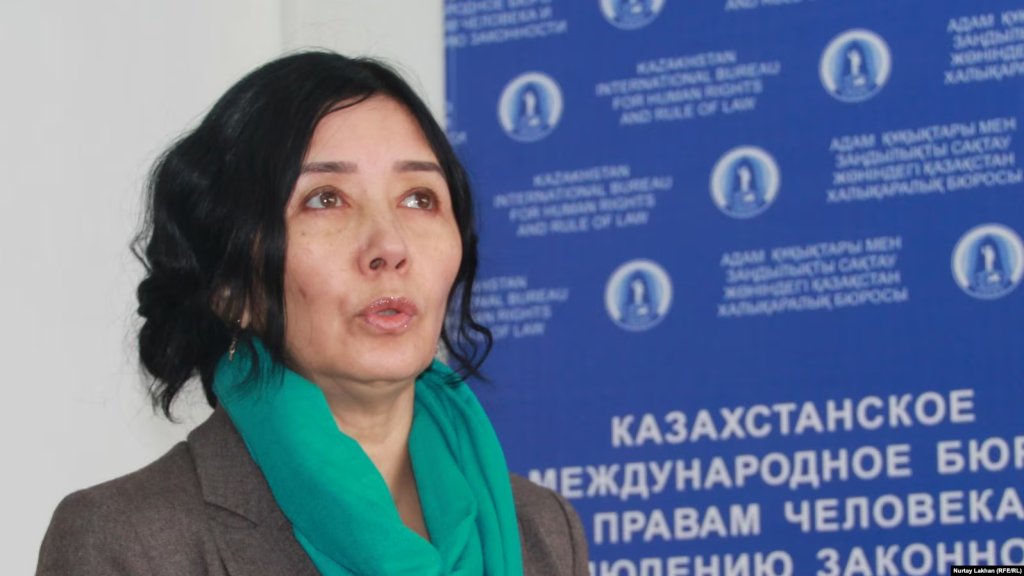
Quatbekova says that, in addition to the Uyghurs who fled to Kazakhstan because of persecution in Xinjiang, there are also Kazakhs who have been granted temporary refugee status but are concerned for their safety.
“WE ARE BEING WATCHED BY UNKNOWN PEOPLE”
Ethnic Kazakhs Murager Alim, Qaisha Aqan, Qaster Musahan, and Bagashar Malik, who fled from Xinjiang and received temporary refugee status in Kazakhstan, are also considering leaving the country as a possibility. After unsuccessful attempts to obtain Kazakhstan citizenship, they asked Nur-Sultan for permission to leave for a third country. Qaisha Aqan, for example, is concerned for her safety and says that she has applied to the Ministry of Internal Affairs three times for permission to leave Kazakhstan.
“According to the law, we have the right to move to a third country,” says Qaisha. “We are constantly being watched by unknown people. When I went to the capital, two strangers broke into our house in Almaty. My husband caught them. I myself have experienced an attack. It has been three years since I came to Kazakhstan. If I get sick, I will not be able to receive free medical care. That is why I’ve decided to leave for a third country. In response to my inquiry, the Ministry of Internal Affairs replied that my travel document is not ready yet, and that this will be possible starting in January 2022. On September 30 of this year, my refugee status was extended for another year. At that time, I again said that I want to leave for a third country, but so far I have not received a definite answer.”
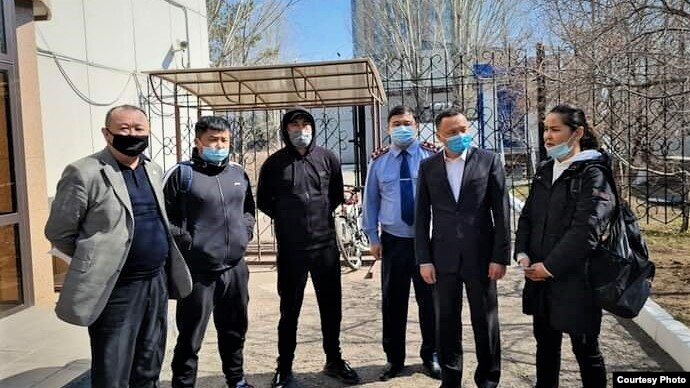
In early January, Qaisha Aqan and Murager Alim were attacked. They link this to their talking about the persecution in China.
Erbol Dauletbek, the head of the “Atajurt Volunteers” organization, which in recent years has been raising issues concerning Kazakhs in China, also says that it is dangerous for those who have fled from Xinjiang to remain in Kazakhstan.
“Most former camp prisoners are people who have spoken out about China’s crimes,” says Dauletbek. “They cannot live in Kazakhstan. In order to live peacefully in Kazakhstan, they must not tell anyone about what they saw and experienced. Those who have spoken out will not be allowed to live in peace. Because of China’s long arm. Secondly, even if they obtain refugee status in Kazakhstan, they do not benefit from either economic or medical protections.”
Legal specialist Esbol Omirzhanov says that “there is an agreement between China and Kazakhstan regarding the transfer of convicted persons”. According to him, under the agreement signed in 1996, the parties are obliged to mutually transfer persons sentenced to at least one year and convicted under serious articles.
“Given the close ties between Kazakhstan and China, China can quickly find anyone in Kazakhstan,” says the legal specialist. “In other words, a fugitive from Xinjiang cannot hide from the Chinese special services in Kazakhstan.”
“KAZAKHSTAN IS AFRAID OF PRESSURE FROM CHINA”
Qaharman Ghojamberdi, an Uyghur civil activist, believes that refugees from Xinjiang were forced to leave Kazakhstan because of China’s influence. In his opinion, Kazakhstan is compelled to comply with China’s demands.
“China can, at any moment, economically pressure Kazakhstan and force it to comply with its demands,” says Ghojamberdi. “[Kazakhstan] also has to protect the Kazakhs living in China, which is why it follows a policy of ‘keeping the wolves fed while keeping the sheep safe’. If [China] demands it, [Kazakhstan] will be forced to hand over those who fled Xinjiang because of persecution. That is why Tursunay Ziyawudun and Gulbahar Jelilova have been forced to seek refuge in another, safer country.”
The political scientist Azimbai Gali also believes that, given the geopolitical and economic pressure from China, Kazakhstan cannot be considered a safe haven for those who have fled from Xinjiang.
“In terms of economic and geopolitical influence, China is the second largest country in the world after the United States,” he says. “That is why our authorities cannot oppose China. Kazakhstan has no reliable ally and no confidence in its own military strength. Therefore, they fear political, geopolitical, and economic pressure from China.”
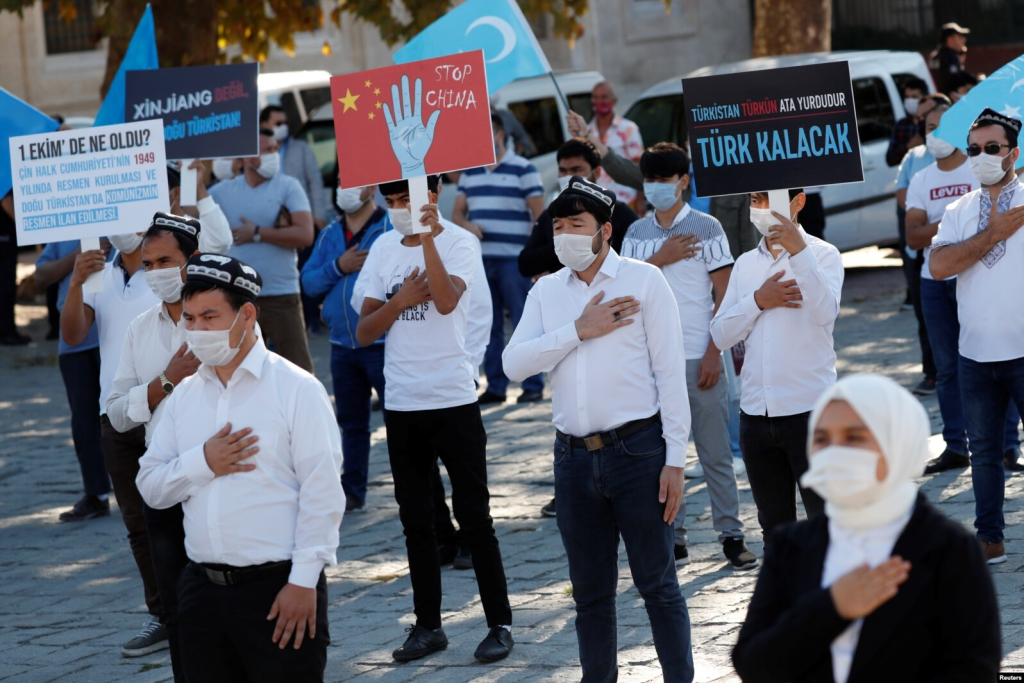
Initial reports of the persecution of Xinjiang’s indigenous ethnic groups – Uyghurs, Kazakhs, Kyrgyz, and other Turkic peoples – in China’s northwestern province bordering Kazakhstan began to surface in 2017. In 2018, the UN reported that up to one million people might be held in “re-education camps” in Xinjiang.
Beijing, which initially denied the allegations about camps in Xinjiang, later described it as a “fight against extremism” and called the camps “centers for language study and vocational training”. This policy has brought peace to Xinjiang, according to Beijing.
A report by international researchers published in 2020 states that Chinese authorities are forcing women to undergo sterilization or use contraceptive devices in order to limit the birth rate among Turkic-speaking ethnic groups, such as the Uyghurs and Kazakhs. Former camp inmates report that women are raped and that men are tortured in the camps.
The US Congress, as well as the parliaments of the United Kingdom, Canada, and the Czech Republic, consider China’s policies in Xinjiang to amount to genocide. Beijing has repeatedly called the situation in Xinjiang “China’s internal affairs”.