

Esbol Muqamadan, a successful Kazakh entrepreneur originally from Toqquztara County in Xinjiang, has found himself entangled in a complex legal situation spanning both China and Kazakhstan. Previously a victim of the mass incarcerations in Xinjiang, he is now serving an eight-year prison sentence in his historical homeland – a verdict that he claims is partially due to political interference by the Chinese authorities.
Born and educated in China, Esbol graduated from Lanzhou University’s chemical engineering program in 1992 and worked for China’s Ministry of Chemical Industry. Following the ministry’s restructuring, he transitioned into a prominent role representing the Kazakhstan Railway. Leveraging his cross-border expertise, he subsequently established his own logistics business in Urumqi, operating successfully until the worsening political climate prompted him to relocate to Guangdong Province in 2016.
In September 2017, Esbol’s life took a dramatic turn, when he received an urgent and unsettling call from Officer Xu of the Urumqi police, summoning him back from Guangdong under unclear circumstances. Esbol complied promptly, sensing the gravity of the situation.
“From the airport, I went straight to the police station, without even going home,” Esbol recounted in a public conversation with Serikjan Bilash of Atajurt last year. “First, they asked me to tell them my biographical details. Then, they asked why I had travelled to Kazakhstan so many times. After that, they showed me several pictures that I was in, and said that these were pictures I had shared on my WeChat Moments. I confirmed, while telling them everything as it was or as I remembered it.”
By morning, he would find himself detained at the Urumqi No. 1 Pre-Trial Detention Center.
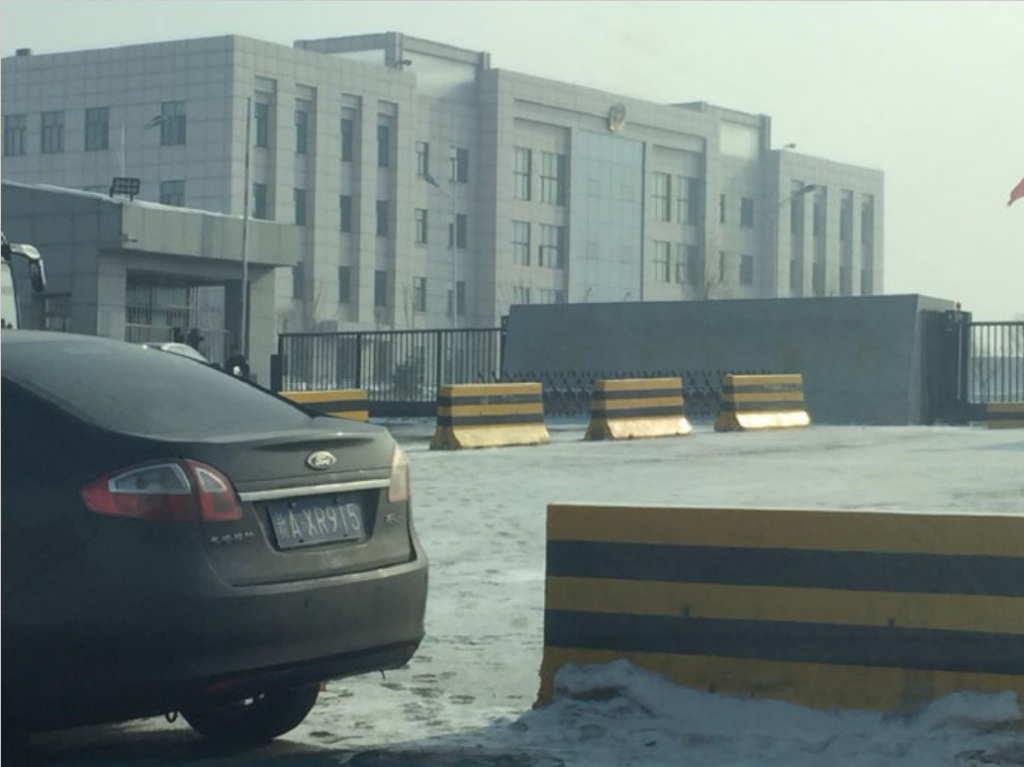
During his two months there, Esbol experienced some of the same harsh conditions that have been reported by other detainees and in internal police records. He detailed overcrowded cells – intended for 16 but holding over 60 in practice – forced political indoctrination, and a general culture of fear.
At night, we would take turns guarding each other in 2-hour shifts, with 12 people simultaneously standing guard while the rest slept. We did it that way because the 12 people standing guard only had enough room to stand, not to lie down. There wasn’t enough space for everyone to sleep at the same time, so we made up this rule ourselves.
Every morning, we would spend 3 hours watching television, with another 3 hours in the afternoon. All of it was about the president of the People’s Republic of China – his advice, other people praising him.
I wanted to ask the police guards questions, but the people there told me that I could not talk to the police or look directly at them. They said that we should avert our glances from the police. Otherwise, they would take us away and beat us to death, and that if you died, they wouldn’t even bother to return your body to your family.
Despite intensive interrogation and repeated insinuations that his frequent travel and international contacts indicated criminal behavior, Esbol was ultimately released. Shortly after, he relocated permanently to Kazakhstan and obtained citizenship.
There, Esbol continued with his various business projects. In September 2018, he met and began collaborating with Han Yuhua, a Chinese businessman, on an initiative to build a cement and stone-processing plant. However, these plans quickly unraveled when Han failed to provide the substantial investment he had assured, leading Esbol into significant financial difficulties. In his appeal letter, addressed to Kazakhstan’s Prosecutor General, Esbol details how Han stalled and avoided providing funds by sending Esbol used machinery instead, claiming that it could be sold in exchange for greater profits. When he saw that the customs fees for the machinery were higher than any potential gain from selling it, Esbol promptly told Han to not send any more.
According to Esbol, Han then took the initiative and preemptively accused Esbol of fraud, alleging the Kazakh businessman to have deceived him financially. Esbol strongly refutes these allegations, claiming that Han fabricated the charges to cover his own financial dishonesty. Moreover, Esbol alleges serious misconduct in how the Kazakh authorities handled the investigation.
“During the interrogation, the investigator B. N. Shaihullayev threatened me by saying that he would lock me up together with my wife and children,” Esbol wrote in his appeal letter. “Han Yuhua had admitted to giving money to the head of the investigation department and to Investigator Shaihullayev. He told me: ‘Do not give them money, if you come to terms with me, your case will be solved.'”
Esbol has further suggested undue influence from Chinese diplomats to have the case pursued even after it had initially been dropped. He has also accused Han Yuhua of hiring hitmen to pursue him and his son.
Now sentenced to eight years in Kazakhstan, Esbol suffers from serious health issues, including two previous strokes, high blood sugar, and a requirement for breathing assistance while sleeping – conditions that are likely to be worsened by his imprisonment.