

The mass incarcerations in Xinjiang that started with unprecedented intensity in 2017 had two main tracks: the much-covered extrajudicial (the camps) and the comparably large but largely underreported (nominally) judicial one. For the latter, detainees were rushed through the criminal procedures, often with copy-pasted “evidence”, the retroactive criminalization of activities decades earlier, and a complete lack of public documentation. After being given long prison terms, they were sent to one of the region’s nearly 60 prisons, where they joined many of the political and religious prisoners from earlier crackdowns (the majority from the People’s War on Terror that started in 2014). Official judicial statistics, the sizes and number of the known prison facilities, and known local imprisonment rates all suggest the ballpark figure of around half a million to accurately reflect the number of people given prison terms as part of the mass sentencings that started in 2017.
While there are numerous indications of the camp system being largely wound down by late 2019 – with the fates of over 1000 released individuals being documented, sometimes in significant detail – the same cannot be said about those formally imprisoned. In addition to the general information vacuum in Xinjiang, for a long time the lack of real news (apart from “he’s still in prison”) was simply because hardly anyone came out. With the vast majority sentenced to at least 5 years, the average prison term approaching 10 years, no mass pardons or releases, and no real international pressure regarding the issue, it would be a long wait before we’d see those sentenced in 2017-2018 start to finish their terms, with large numbers of scheduled releases only starting in 2022 (for those detained in 2017 and given 5 years).
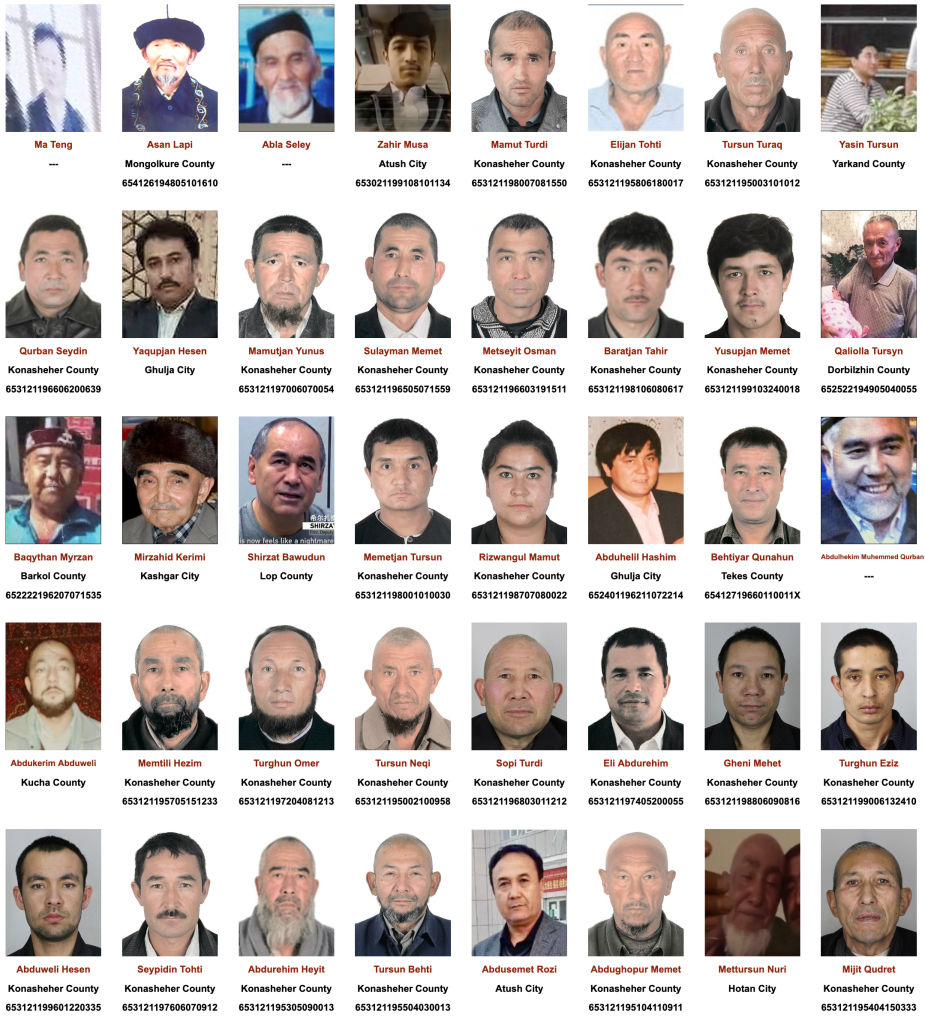
Before reviewing what happened to different people after prison, it is important to remember that not everyone was able to finish their prison term, with a significant number – often the elderly – perishing there. To date, 177 people have been documented as having died while serving prison terms at some point after 2017.
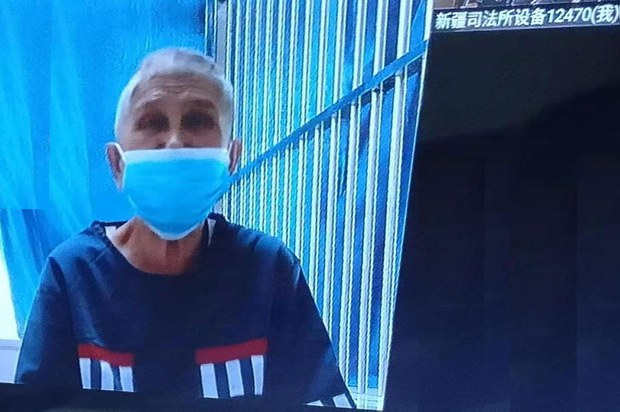
In very few known cases, prisoners have been released on medical parole. Some, like the scholar Abdusemet Rozi, were allegedly released only for a period, before being taken back into detention (where Abdusemet later died). Others, like Helchem Pazil and Anarhan Qanatbek, both very elderly women suffering from serious health issues, appear to have been allowed to remain outside detention after spending years inside.
Some prisoners have been trapped in various forms of “carousel incarceration”.
Of these, a very particular group are those whose prison terms were scheduled to end in 2017, 2018, or early 2019. In most cases, these were either the former generation of (mostly) political prisoners from previous crackdowns who had been sentenced prior to 2017, or people sentenced to very short terms in 2016-2018 (often for petty crimes). A lot of the time, these people were sent to camps immediately or very soon after release, as evidenced by 50 documented cases and China’s own white paper. As an example, a police report from Urumqi, for the week between February 25 and March 3, 2019, illustrates this very explicitly for detainee Rustem Dadihan:
7. Rustem Dadihan (male, Uyghur, ID: 65010219870727401, place of household registration: Apt. 201, Entrance No. 2, Building No. 7, 360 Herong Alley, place of current residence: place of household registration: Apt. 201, Entrance No. 2, Building No. 7, 360 Herong Alley) of Zhongtai Neighborhood was released upon completion of his sentence on February 28, 2019. After the People’s police picked him up from the No. 2 Pre-Trial Detention Center, he was taken to the Badaowan Vocational Education Center for transformation through education.
In theory, many of those sent to camp this way may have been released between late 2018 and late 2019, with the winding down of the extrajudicial camp system, though those still considered “problematic” may have simply been re-detained and sentenced again, joining a seemingly significant minority whose return home after camp was short lived.
Simultaneously, there are known cases of people who were sentenced for behavior in prison, significantly extending what were already very long prison terms. The strongest illustration of this phenomenon comes from two verdicts issued in 2018 by a Bingtuan court in Kuytun and published on China Judgments Online (likely out of neglect, as both have since been deleted). One of them is for Ababekri Dayim, a ~30-year-old farmer from Aksu who was initially sentenced to 11 years on “terrorism” charges in 2016 and sent to Gaoquan Prison. According to the verdict, in early 2018, while at the prison, he started displaying abnormal behavior, did not follow the prison discipline, paced around, talked senselessly, did not sleep at night, and did not obey the prison staff when they tried to get him to behave normally. This resulted in his being transferred to solitary confinement, where he tore down the national emblem in the cell and bit on it. Despite strong indications of mental illness, the incident was attributed to “religious extremist thoughts” in what was allegedly Ababekri’s own confession, and he was given an additional 3 years for “undermining supervision order“.
In the other verdict issued by the same court at around the same time, Ismayil Sidiq, a ~50-year-old farmer who had been sentenced to 10 years in 2017 for “propagating extremism”, was given an additional 11 years for “undermining supervision order” and “inciting ethnic hatred”. This was the result of covertly praying, performing an ablution, reprimanding other Uyghur detainees for snitching on him, and refusing to write a “thought report”.
There have also been instances where prisoners have had new cases opened against them by police outside the facility, regardless of their behavior in prison. The peculiarity here is that the prisoner may be taken out of the prison and put in a pre-trial detention center, to be subjected to a whole new litigation process, with a new sentence (presumably on top of the current one) as a result. The most extreme known example is that of the Hui religious leader Jin Dehuai, a businessman and a prominent member of the Tablighi Jamaat, who was initially sentenced to 7 years in 2015 but had his case “revisited” in 2017 following “errors” being found in the original process. According to his court verdict, he was put in pre-trial detention in early 2017 and would have his punishment changed to life in prison, for “separatism”. More generally, this phenomenon has been noted for a number of political/religious prisoners from previous crackdowns, with police taking them out of prison in 2017 and opening new cases against them.
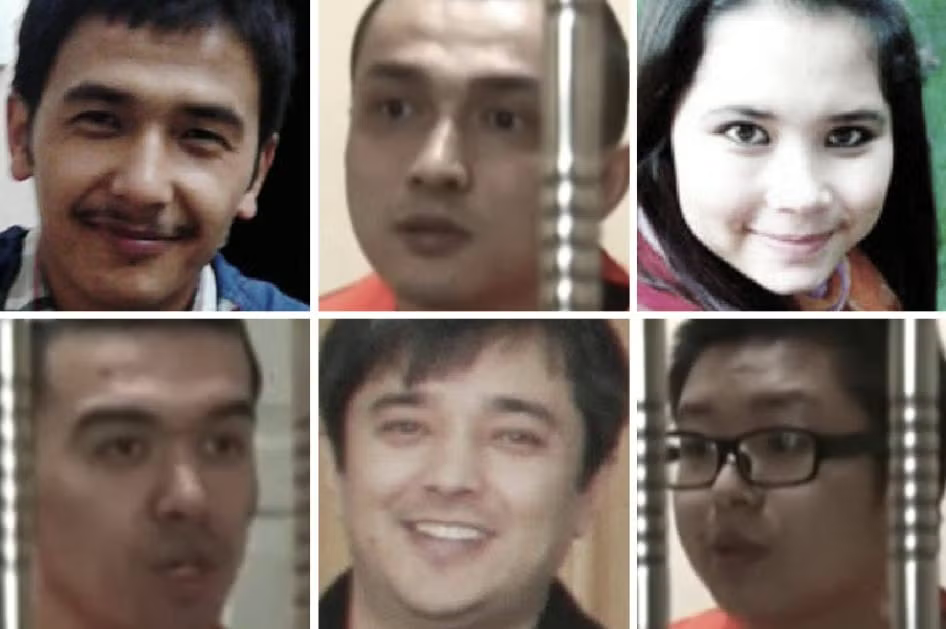
Currently, there are not enough data to say with any confidence how common such extensions or re-sentences are. Because Xinjiang essentially continues to remain an information vacuum, with no mechanisms by which one could actively obtain information about specific inmates, for the vast majority of cases we simply don’t know if a certain individual has been released, or if they met with further misfortune while in prison. This includes very high-profile cases, such as that of the “Ilham Tohti students” – the seven young assistants who helped with Ilham Tohti‘s “Uighur Online” website and who were sentenced to various terms for “separatism” in 2014. For six of them, we know their place of detention and release date, and know that all of them should have been released by now, with the longest sentences ending in early 2022. However, there is no public information regarding what’s happened to them since, if they made it through their prison terms, and if they’ve been released.
In fact, the only thing reminiscent of an “update” is the inclusion of Atikem Rozi – in a prison uniform – for propaganda purposes in the 2021 film “The War in the Shadows“. However, even this leaves more questions than answers, since Atikem should have been released in 2018. It is not known if the footage was simply recycled from years before the film aired, or if it was more recent, suggesting that she was still in prison.
Given these circumstances, it remains difficult to take any scheduled release date at face value, and it is our recommendation to not simply assume that someone has been released because their term has theoretically expired. As conveyed by Chen Quanguo in his May 2017 speech, the limit for how long a person may remain detained is largely subjective and contingent on the degree of the person’s “transformation”. Realistically, new cases can always be opened and new “violations” can always be found.
At the same time, there are certainly releases that have been and continue to be honored. Because the information currently available is very piecemeal in nature, it is difficult to say if they are honored for most people. For what it is worth, reports of honored releases do seem more frequent than reports of extended terms, though both are too few to make any strong claims.
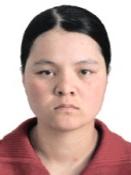
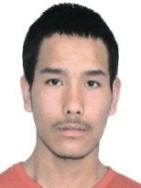
The constant monitoring and scraping of the Chinese internet provides one useful means to obtain such updates, though what information is obtained (and for whom) is largely a matter of chance. A good recent example is a spreadsheet uploaded to the website of the Kashgar Special Economic Zone in March 2025, which provides a list of 20 people who completed a one-month vocational course in courier work between December 2024 and January 2025. Surprisingly, 8 of the 20 are also documented prisoners from Konasheher County, with release dates that predate the reported training period (suggesting that all made it through their prison terms and attended the course at various points after release from prison). Apart from the bizarre fact that documented prisoners make up 40% of this particular list, there currently do not appear to be any indications that the course was not legitimate in nature. The situations of the 8 former prisoners are summarized in the table below.

|
Yusuphaji Rozi | Sentenced to 6 years in 2017, with release scheduled for 2023. |

|
Abduqeyyum Muhter | Sentenced to 7 years in 2017, with release scheduled for 2024. |

|
Qurbanjan Rozi | Sentenced to 6 years in 2017, with release scheduled for 2023. |
|
|
Sawur Himmet | Sent to camp in 2017, then sentenced in mid-late 2018. Term length unknown. |
|
Zumretgul Emet | Sentenced to 6 years in 2017, with release scheduled for 2023. |
|
|
Memeteli Shemsidin | Detained/sentenced to 8 years in prison in 2015, with release expected in 2023. |
|
Yusupjan Tursun | Sentenced to 6 years in 2017, with release scheduled for 2023. |
|
|
Iminjan Qurban | Sentenced to 9 years and 6 months in July 2014, with release scheduled for November 2023. |
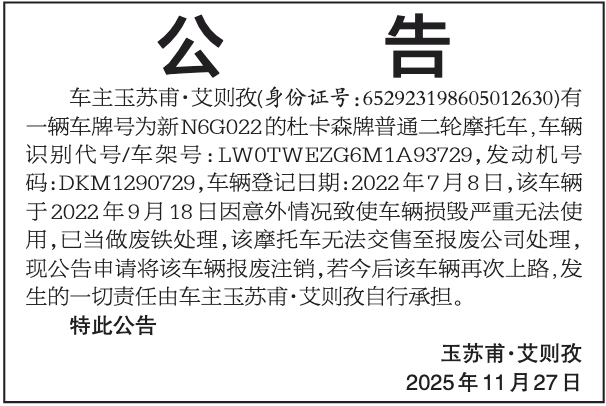
Updates may also be possible through seemingly mundane posts or announcements in local newspapers. For example, the November 27, 2025 issue of the Aksu Daily included an announcement from Yusup Eziz, who had previously been sentenced to 7 years in 2015 for “using superstition to undermine law enforcement”, with release scheduled for March 2022. In the announcement, Yusup stated that he registered a motorbike in July 2022 (four months after the scheduled release date), saw it severely damaged in an accident two months later, and was now applying for it to be scrapped and deregistered, accepting any legal responsibility if the vehicle were driven again. From this announcement, we can suppose that Yusup was probably released as scheduled in 2022, and was seemingly not detained as of late 2025.
In a small handful of cases, members of the Xinjiang diaspora have also reported their relatives being released as scheduled but have kept this news private, out of fear that bringing public attention to the matter could have consequences. One person even threatened the Xinjiang Victims Database, telling us to delete their released relative’s information after themselves encouraging us to post it 6 years earlier, claiming that they never asked us to post it and that their relative, previously in prison, was now “living a normal life”.
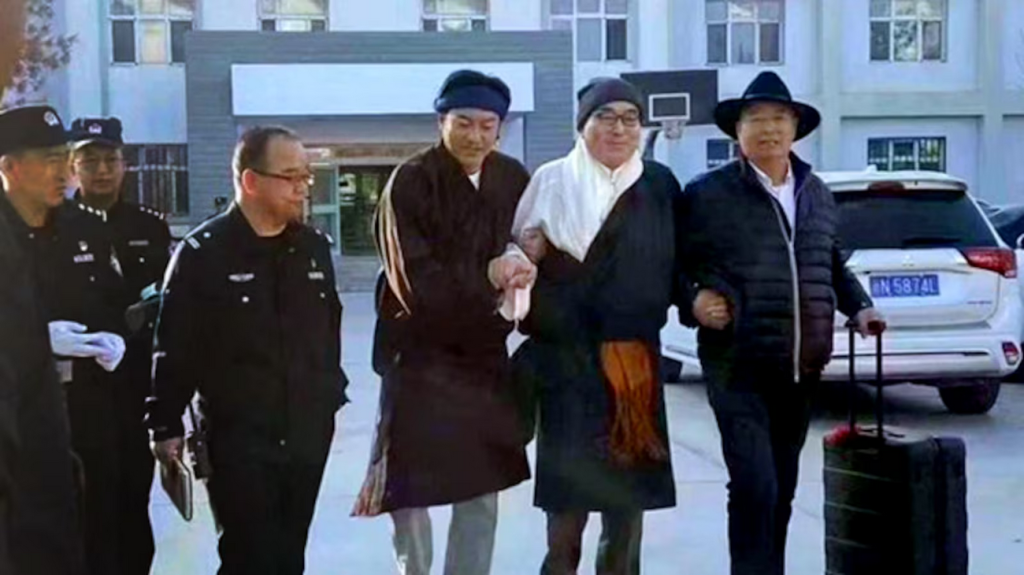
Other releases have been reported publicly, though the number remains small. Both Kamile Wayit and Yashar Shohret, sentenced to 3 years following the White Paper Protests, were recently reported by Amnesty International to have served out their prison terms and returned home. Karma Samdrub, the high-profile Tibetan businessman and philanthropist who was sentenced to 15 years in 2010, left Shayar Prison in November 2024, as family and friends helped him walk (he was later seen in a wheelchair). Alimjan Hemit, an Uyghur Christian from Kashgar who was sentenced to 15 years in 2009 for “leaking state secrets”, was reportedly back home as of March 2023, having served out the sentence. In 2022, an anonymous source also told us that Nurmuhemmet Yasin, previously sentenced to 10 years for his symbolic story, “Wild Pigeon“, was allegedly out of prison and doing business (despite unverified but persistent claims outside China that he died there). In 2024, Radio Free Asia also reported on the release of an Uyghur butcher from Kashgar, after he completed his seven-year sentence.
Finally, scenes of relatives uniting with their loved ones can from time to time be found on Chinese social media platforms. While the videos themselves can be uplifting, the comments under them can sometimes read like prison statistics, with many bringing up their own personal tragedies – saying how many years they’ve already waited and how many more they have left to wait.
Even in the best case of all releases being honored, it is important to remember that, even in 2026, hundreds of thousands continue to remain incarcerated simply because their sentences are just that long.
To get a rough conservative estimate on how many (fine print at the very bottom), we can take the approximate number of those sentenced in 2017 or later and apply the documented sentence-length statistics:
- For an idea of what percent of the population are serving prison terms, we can study relatively large (town or county) localities where full data are available.
- A full list of detainees from Ermudun Township reports 721 of the township’s 15062 people (4.8%) to be “sentenced and in prison” as of mid-2018. A document from Hotan’s Kawak Township, dated to 2019, lists 681 of the township’s 14135 people (also 4.8%) as “serving a prison sentence”. On the county level, the Konasheher List showed that, as of the fall of 2017, around 4% of the entire county was in prison. An extremely detailed police sheet from one of Konasheher’s townships, Tashmiliq, provides detention statistics as of mid-2018, and shows 1740 of the township’s 36345 people (again, 4.8%) to be in prison, with another 643 in custody (and likely awaiting sentencing or prison transfer).
- As such, a 5% imprisonment rate appears to be roughly representative of the region.
- To avoid over-extrapolating, we will again limit the domain to the four southern Xinjiang prefectures of Aksu, Kizilsu, Kashgar, and Hotan, as was done in a recent blog article to estimate the number of abandoned children. Here, the Uyghur population is approximately 9.2 million.
- Multiplying 9.2 million by 5% gives a (rough) estimate of 460000 Uyghurs sentenced (mostly in just 2017-2018).
- If we want to be precise, we can try to estimate what portion was detained in 2017 and what portion was detained in 2018, since this will affect how many remain in prison in 2026. However, this would require extra analysis and assumptions, so we will not do this here. Instead, let us treat everyone as detained and sentenced in 2017. This keeps our estimate simple but conservative, since shifting some of them to 2018 would increase the number still incarcerated today.
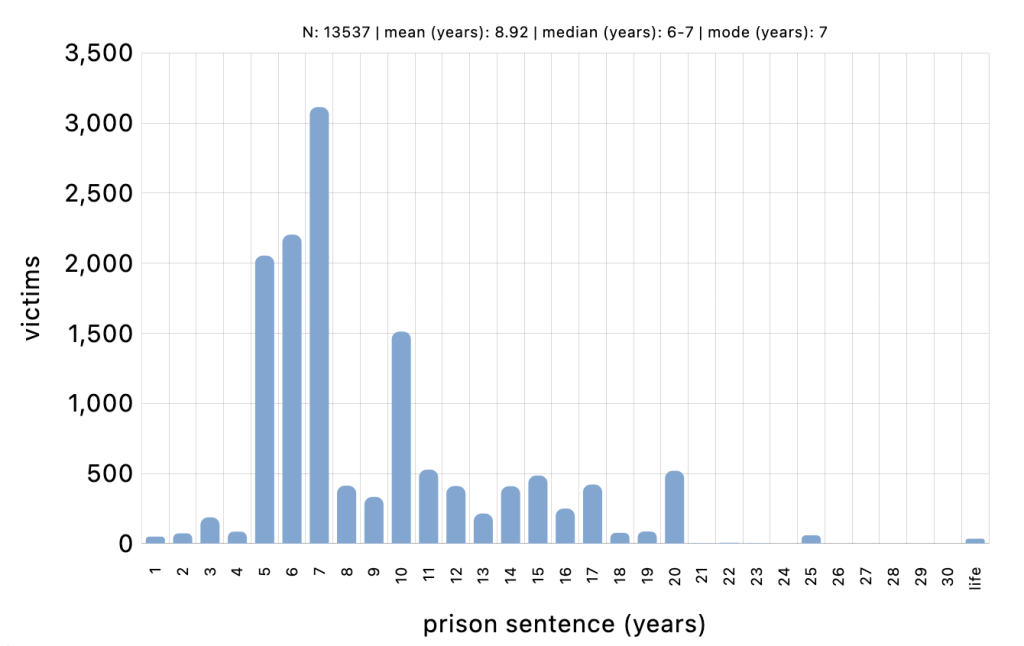
- Let us now reproduce an interactive chart of prison-term length statistics (this is a real-time version, and the numbers may change slightly between the calculations below and when you read them):
- From this chart, we can estimate that 49/13537 (0.36%) of the 460000 prisoners should be out in 2018, an additional 73/13537 (0.54%) should be out in 2019, another 188/13537 (1.39%) in 2020, and so on…
- Applying this logic, we can get conservative lower estimates on the portion of the original 460000 left in prison for each year. This is shown in the table below:
| year | estimated number left in prison (Uyghur, southern Xinjiang) |
|---|---|
| 2017 | 460000 |
| 2018 | 458334 |
| 2019 | 455854 |
| 2020 | 449465 |
| 2021 | 446577 |
| 2022 | 376780 |
| 2023 | 301886 |
| 2024 | 196070 |
| 2025 | 182035 |
| 2026 | 170720 |
| 2027 | 119341 |
| 2028 | 101433 |
| 2029 | 87500 |
| 2030 | 80229 |
| 2031 | 66330 |
| 2032 | 49816 |
By this estimate, we would expect around 120000 Uyghurs from southern Xinjiang to still be in prison at the start of 2027, as a lower conservative estimate and in the best case where releases are honored.