
For at least several decades, Southeast Asia has played an important role as a transfer node for Uyghurs seeking to escape China, most often via porous border stretches in Yunnan and Guangxi. Some examples have been detailed in official court verdicts, and have involved middlemen in places like Guangzhou receiving Uyghurs from Xinjiang, setting them up with private local drivers, and then having smugglers guide them across the border. In a recent case from 2024, Abdureqip Rahman, an Uyghur civil servant from Kucha, fled the country by being smuggled out on a boat from Guangxi to Vietnam, after which he was taken to Cambodia and made to work in a cyberscam compound, prior to being rescued by local authorities but ultimately deported to China.
As seen from Abdureqip’s case, from last year’s extradition of 40 jailed Uyghurs in Thailand, from the 2019 case of Kazakh refugee Galymbek Shagyman, and from multiple older examples, Southeast Asia itself has been far from safe and – owing to its political, economic, and geographical proximity to China – has frequently extradited refugees from China fleeing repression. In many cases, this has happened despite the attempted intervention of the United Nations, though many have criticized the organization for failing in their mission to protect refugees, or in some cases even contributing to the failures.
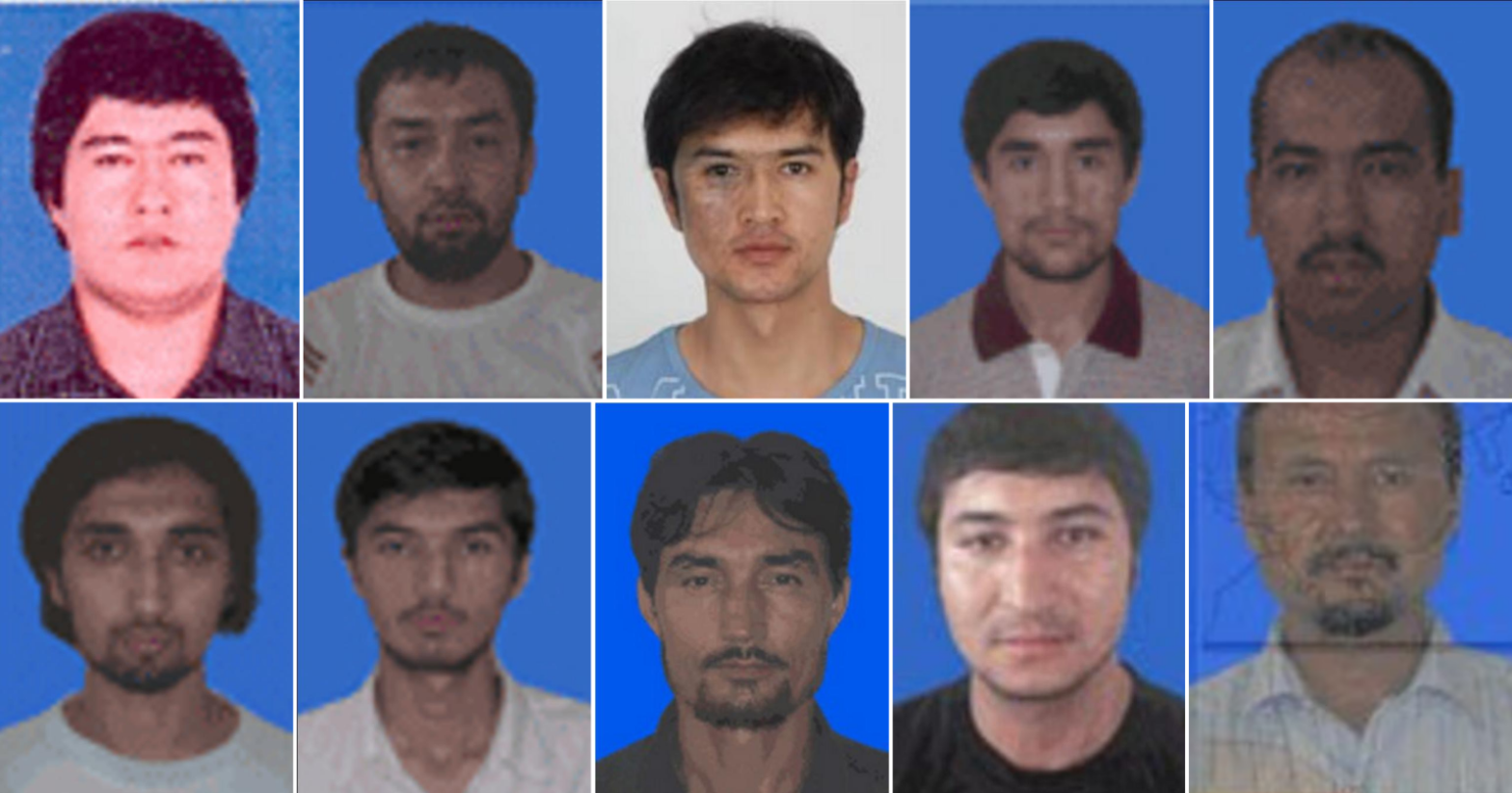
In this article, we would like to rewind nearly 20 years, to review the landmark but now largely forgotten case of the approximately 20 Uyghurs deported from Cambodia in December 2009 – the vast majority of them men who escaped to the country months earlier, reportedly to flee the crackdowns that followed the July 5 unrest. The group was deported just days after China sent a diplomatic note to Cambodia about the men, with Xi Jinping, then vice chairman, visiting Cambodia very soon after. As confirmed by a Cambodian government spokesperson, China explicitly thanked the Cambodian government for their cooperation, while the two countries signed deals worth around 1.2 billion USD. Barring the wife and children of one of the men, essentially all those deported were then taken into custody and held at the Kashgar Prefecture Pre-Trial Detention Center prior to being given long prison terms. According to recent reporting from Radio Free Asia, two of the men died in prison, though the exact identity of one of them remains unclear. With the exception of the four men sentenced to life, most of the others have the details of their sentences specified in one of the prisoner lists that was leaked in late 2021, corroborating much of the previous reporting while providing considerable additional information.
The following is essentially everything that we know about these prisoners today.

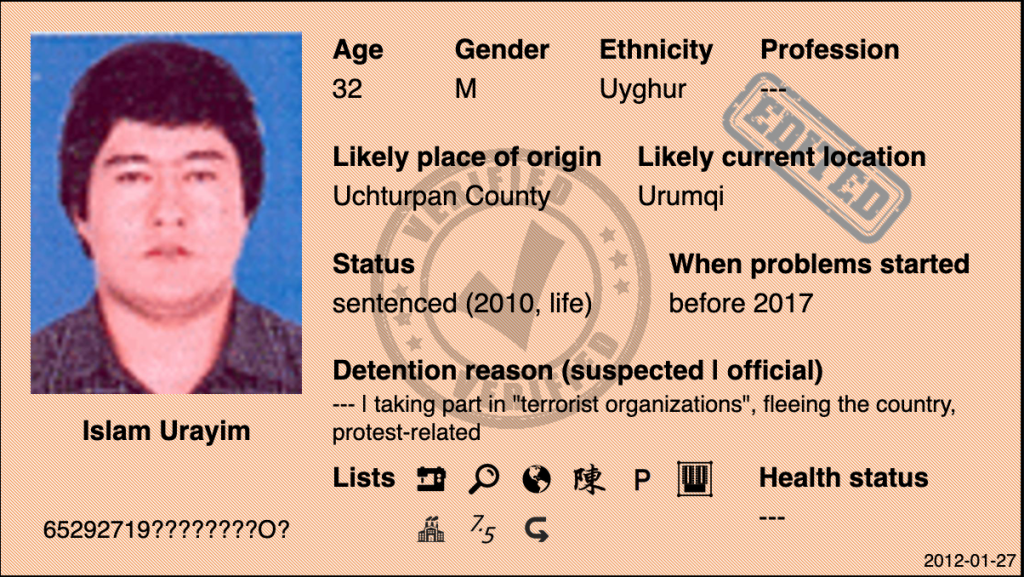
Islam Urayim, now over 46 years old, is a native of Uchturpan County. Little else is known about him, other than that he was one of the four men in the group who received a life sentence, and was reportedly sent to the Xinjiang No. 1 Prison.
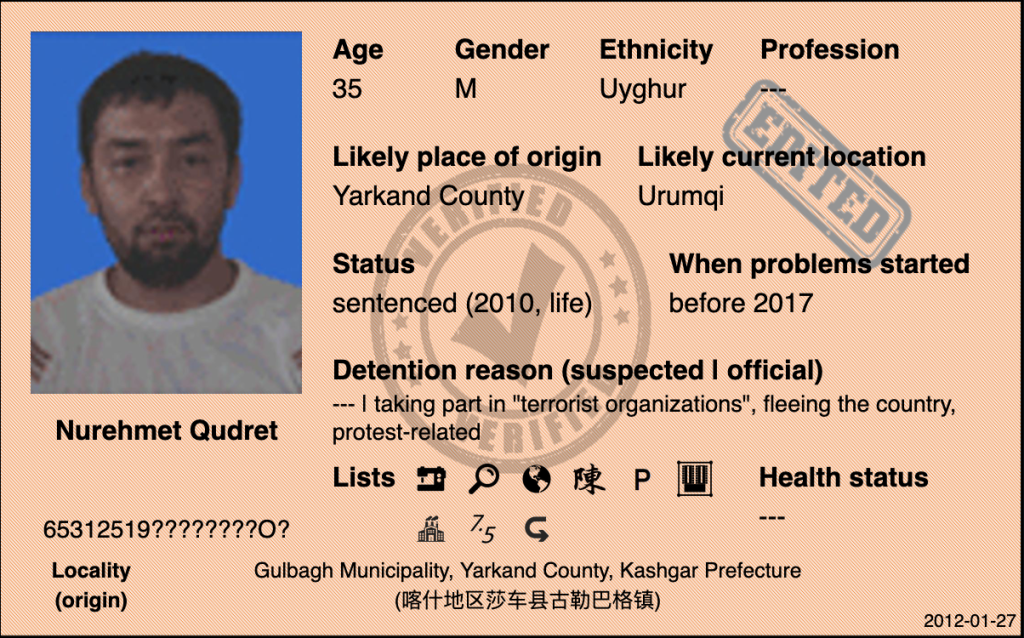
Nurehmet Qudret, now over 49 years old, is from Gulbagh Municipality in Yarkand County. As with Islam Urayim, there aren’t many other details about him, apart from his receiving a life sentence and being sent to the Xinjiang No. 3 Prison.
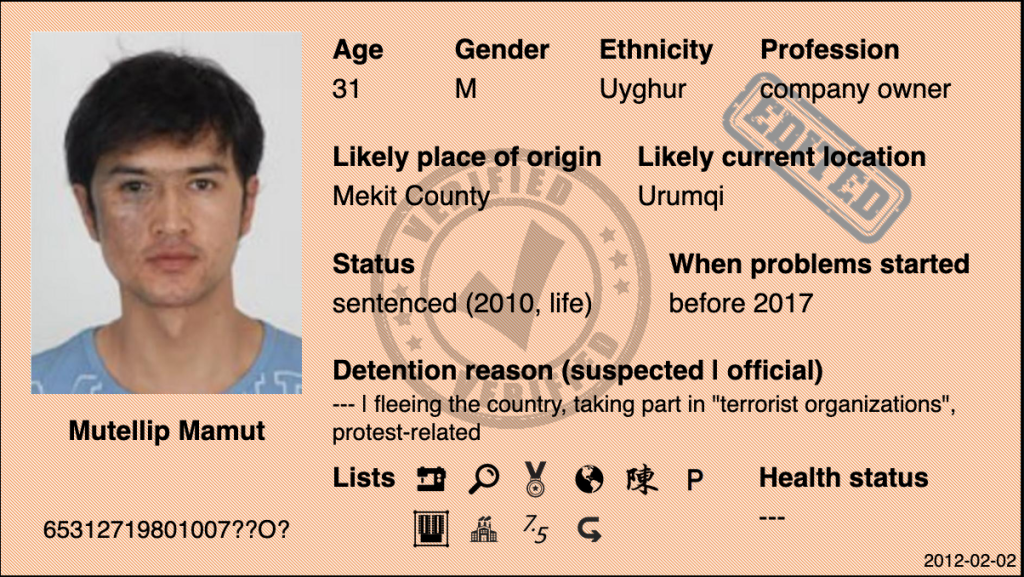
Mutellip Mamut, now 46 years old, is a native of Mekit County and a graduate of Xinjiang University, where he studied Uyghur language and literature. According to the Radio Free Asia profile on him, he started praying during his senior year at university, which led to multiple conflicts with the education and employment system in the region. At the university, the behavior drew police attention and led to warnings. Later, he reportedly finished first in the teacher-qualification exam for Mekit County, but refused the teaching contract because it prohibited him from praying and from allowing students to pray.
Consequently, he moved to Urumqi and used his English skills to find a job as a waiter at the Fulihua Hotel, prior to joining the traffic police bureau six months later. Three months later, he resigned, reportedly disillusioned with the corruption and injustice he encountered. After some time selling phones on the street, he opened his own shop, and by 2007 had two shops employing six people. In 2008, he relocated to Shenzhen, where he developed his business and shipped phones to Urumqi, Kazakhstan, and Russia.
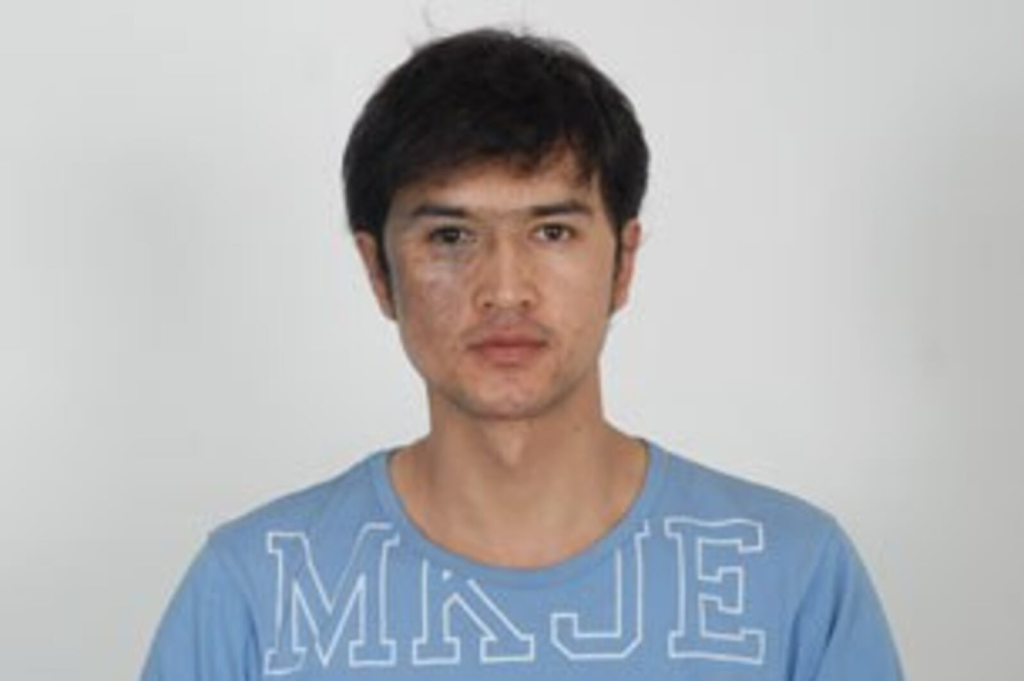
In early 2009, he made a large deal with someone from Kazakhstan, but only received a portion of the money promised. Despite applying for a passport to go abroad and find the client, he was unable to as authorities refused to issue approval. However, after hearing that the person was going to be in Urumqi on July 5, he flew there from Shenzhen and found himself dragged into the protests that erupted in the city that day. Fearing the resulting crackdown, he quickly returned to Shenzhen ten days later, and fled the country with a small group of Uyghurs in September, arriving in Cambodia in October.
Following the extradition to China, he was sentenced to life in prison, and is believed to be at the Xinjiang No. 1 Prison.
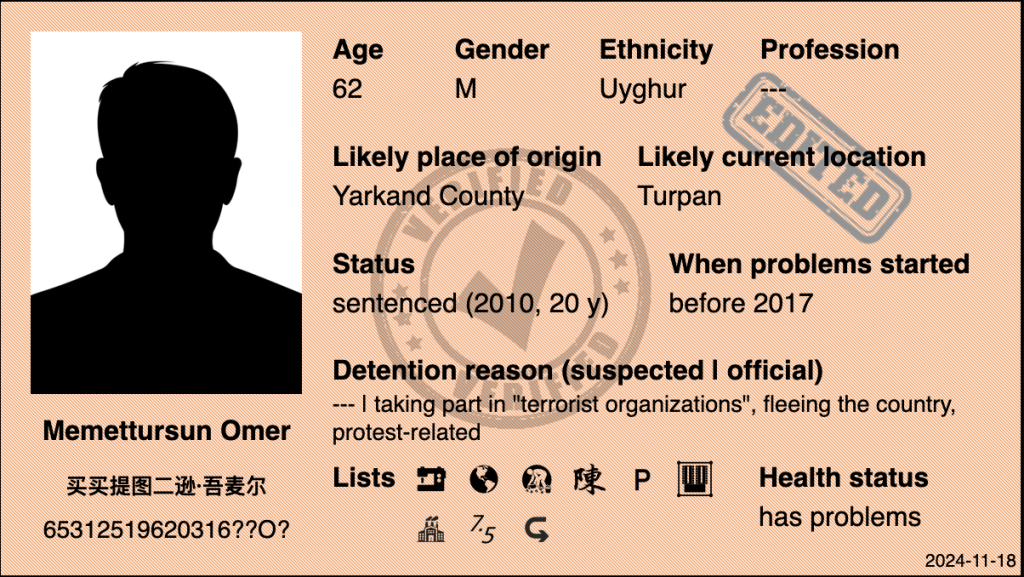
Memettursun Omer, now 64 years old, is a native of Yarkand County. Following extradition and being sentenced to 20 years, he was transferred to prison in 2011. According to recent reporting from 2024, he has been held in Turpan Prison and allegedly forced to work despite his age and being seriously ill with hyperthyroidism.
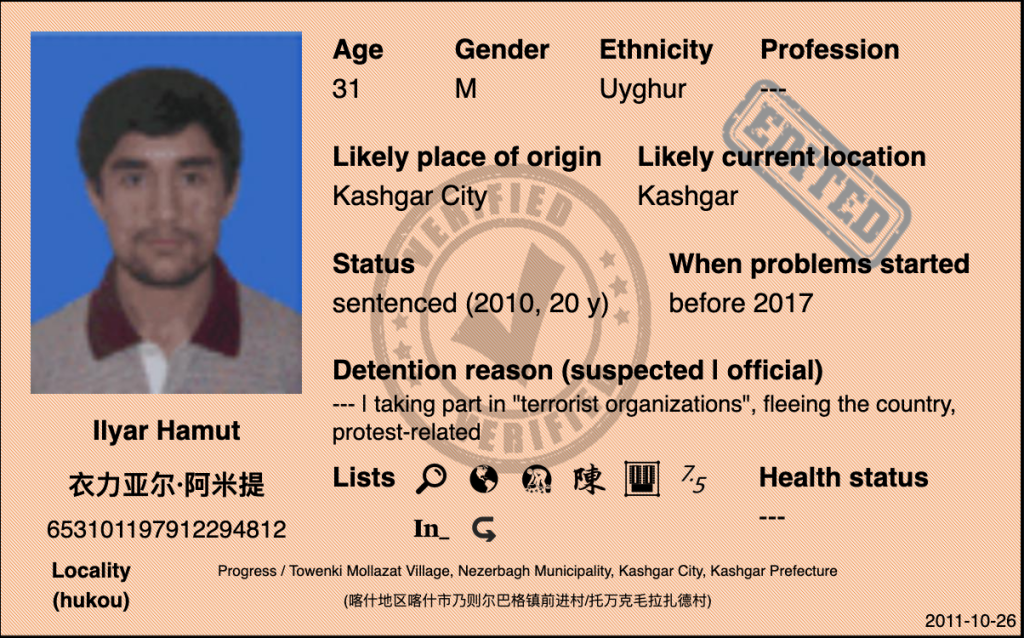
Ilyar Hamut, now 46 years old, is from Towenki Mollazat Village in Kashgar City’s Nezerbagh Municipality. Following extradition, he was sentenced to 20 years in prison, with no other news since.
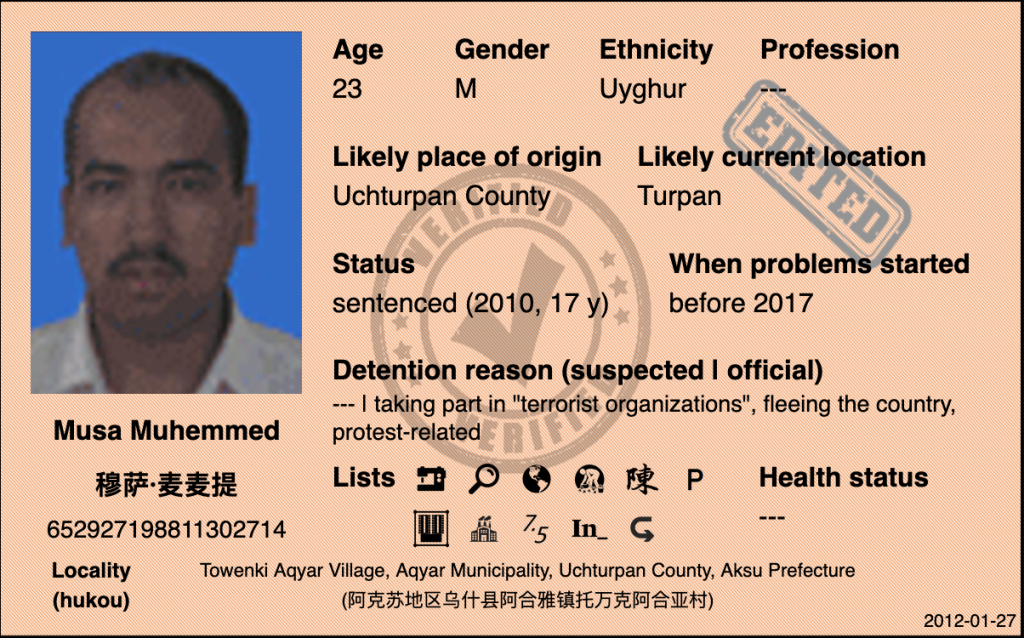
Musa Muhemmed, now 37 years old, is from Towenki Aqyar Village in Uchturpan County. After the extradition, he was initially held at the detention center in Uchturpan, prior to being moved to the one in Kashgar with the other Cambodia deportees. He was then sentenced to 17 years and transferred to Turpan Prison. While an internal record gives his scheduled release date as February 29, 2028, this may be an error – if the 17 years were counted from the initial detention in late 2009 (as they should be), then he may be released very soon.
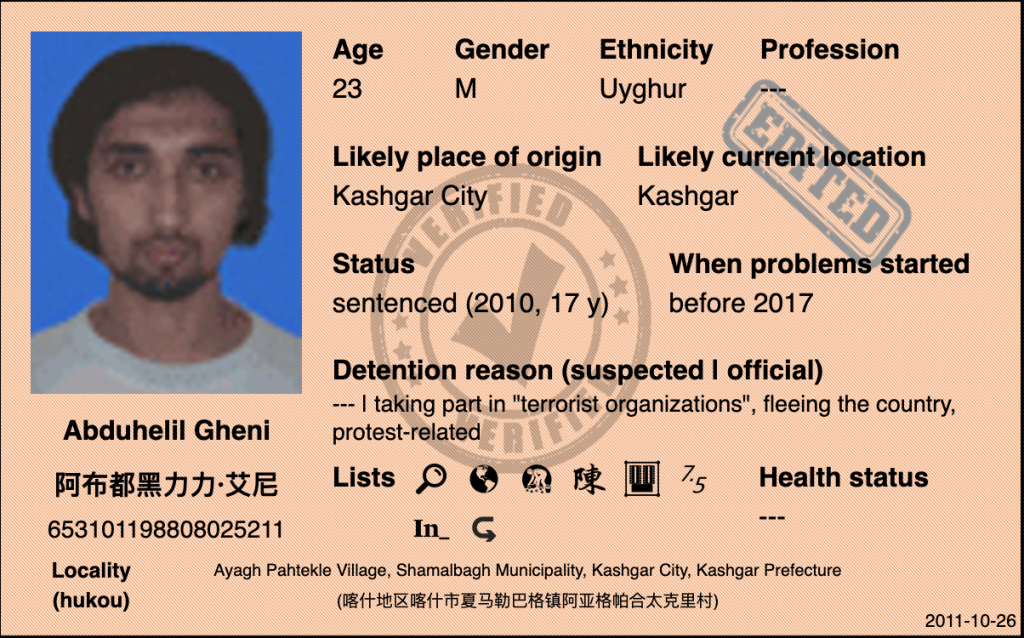
Abduhelil Gheni, now 38 years old, is from Kashgar City’s Ayagh Pahtekle Village. Little is known about his circumstances, apart from that he was sentenced to 17 years in prison, with the facility unclear. As with Musa Muhemmed, an internal document gives his release date as February 29, 2028, though it should be a lot sooner if counting 17 years since the initial detention (in late 2009).
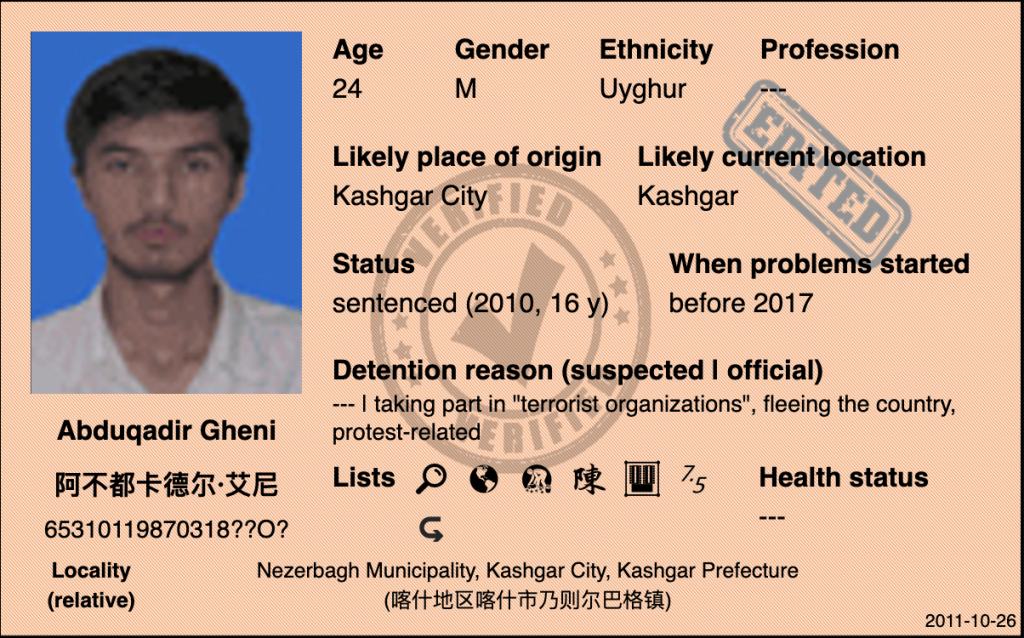
Abduqadir Gheni, now 39 years old, is from Kashgar City (there is a possibility that he and Abduhelil Gheni are brothers, but this has not been established). Following the extradition and trial, he was given 16 years in prison, with the prison destination unclear. He was scheduled for release on December 19, 2025, and – barring unforeseen incidents – should theoretically be out of prison today.
Unlike most of the others, Abduqadir fled China with his family – his wife Shahide and their two small children, Bilal and Maymune. Shahide was also pregnant with a third child. They were deported as well, with Shahide first held in custody in Urumqi for 8 days, then transferred to Aksu, interrogated there, transferred to Kashgar, and interrogated there as well. In total, she ended up spending 6 months in custody. According to recent reporting from Radio Free Asia, the harsh treatment she met with during this period resulted in her having a miscarriage four months into her pregnancy. It is not known if she was targeted or detained later, especially in the 2017-2019 period, though there is a high risk of this given her identity (having a criminal record and being a relative of a detainee).
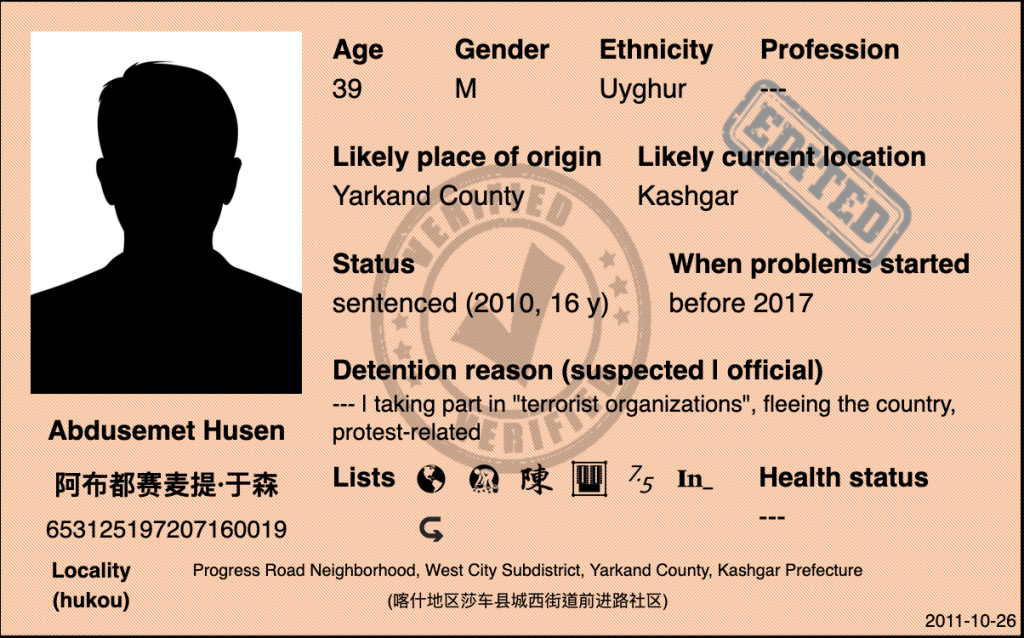
Abdusemet Husen, now 54 years old, is from the urban center of Yarkand County. After extradition, he was sentenced to 16 years, with the specific prison unknown. Although one internal record gives his scheduled release date as February 28, 2027 (suggesting an upcoming release), this may be an error, since the detention in late 2009 coupled with a 16-year sentence should imply that he was released already, in 2025.
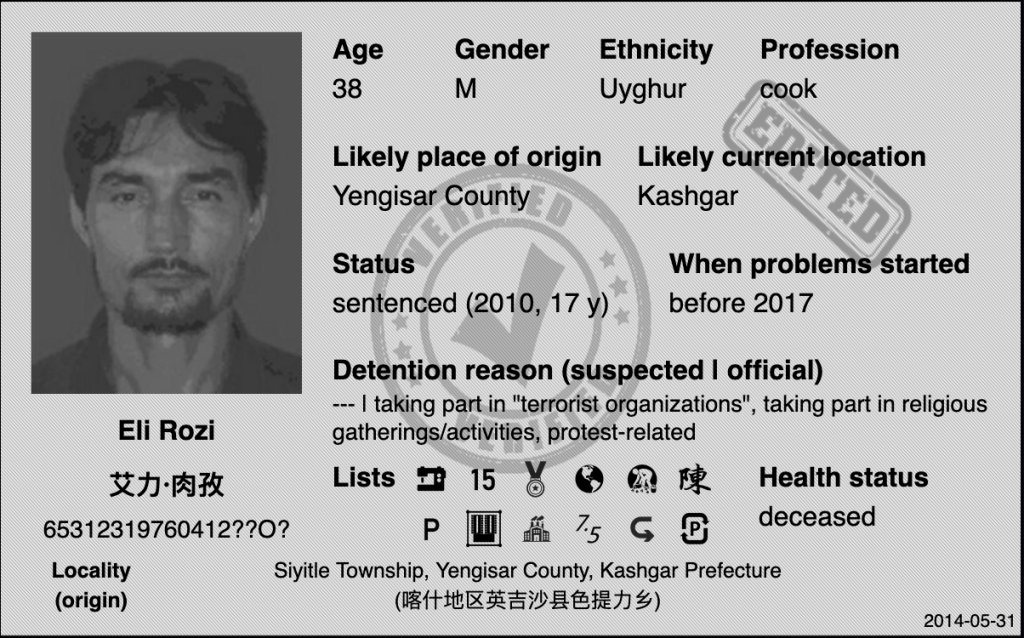
Eli Rozi (usually “Memtili Rozi” in reporting) was born in Yengisar County’s Siyitle Township in 1976, but moved to Ghulja at a young age. After primary school, he took to learning baking, and would later open a naan shop in the city’s Han Bazar. He later went into commerce, following the opening of the border-trade zone in Ghulja. In 1997, after the February 5 incident that year, he was held in detention for 15 days. Then, in 2000, he was detained and sentenced for “illegal religious activities”.
After serving out a 3-year term, Memtili first moved to Urumqi and opened a bakery there. He later relocated to Guangzhou, opening a bakery there as well. While in Guangzhou, he broke one of his arms in a traffic accident – most likely in 2008 or 2009 – and required surgery, with three metal rods being inserted into the bone. Despite being in inner China when the unrest of July 5, 2009 took place, he still feared for his safety, as there were crackdowns on Uyghurs in Guangzhou as well, and fled the country, eventually arriving in Cambodia.
Despite being described as deported with the others in late 2009, a later report clarified that he had actually managed to avoid deportation by fleeing to Laos, where he eventually reunited with his wife, Gulbahar, and their five children in March 2010 (who fled China to meet him there). However, the reunion didn’t last long, as all were arrested by the local authorities on the same day, and deported to China.
Following this deportation, they were first held in custody for 32 days in Yunnan’s Mengla County, during which time police from Xinjiang came to interrogate them. Gulbahar and the children were then released and sent back to Ghulja, while Memtili remained in custody, eventually to be transferred to the detention center in Kashgar. Although doctors had warned him to have the metal rods removed by February 2010, these events made this impossible, with the situation further exacerbated by the custodial authorities refusing three times to allow Memtili to make the necessary hospital visit to have the procedure done. It is not clear when/if they were finally removed.
After being given a 17-year sentence, he was transferred to the Pailou Prison in Yarkand. It was recently reported that he lost his life there in May 2014. He was 38.
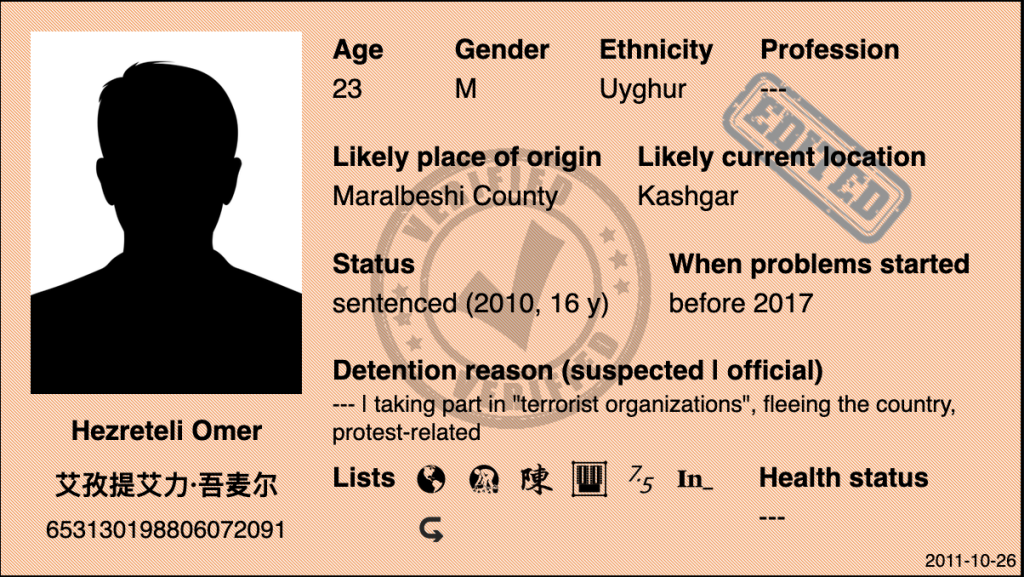
Hezret’eli Omer, now 38 years old, is from Maralbeshi County. After extradition, he was sentenced to 16 years, with a scheduled release date of December 19, 2025. Barring any incidents, he should have been released by now.
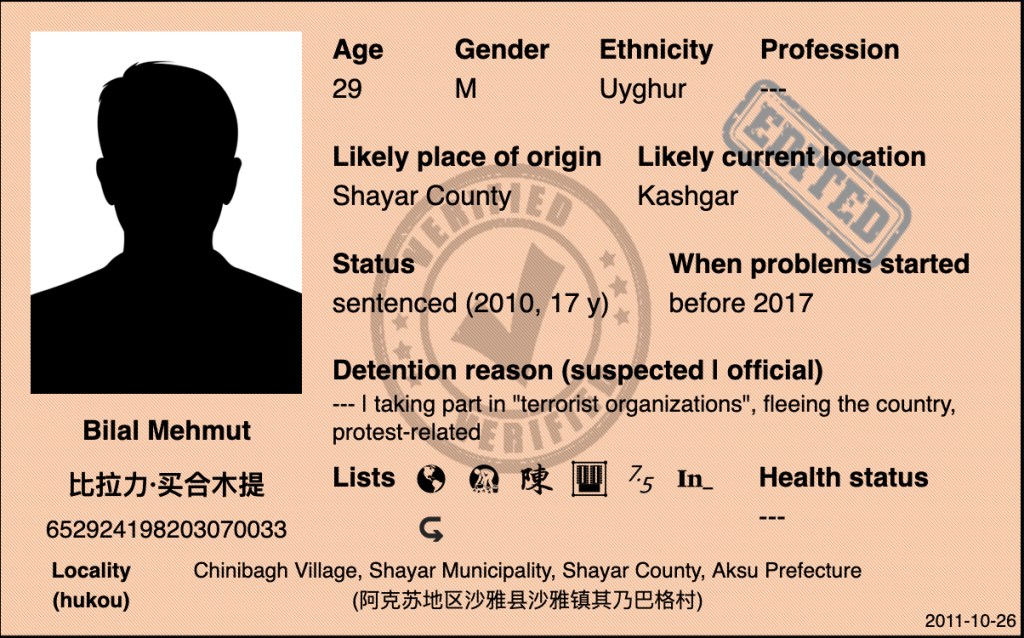
Bilal Mehmut, now 44 years old, is from Shayar County‘s Chinibagh Village. He was sentenced to 17 years, with the prison unknown. As with some of the others, the scheduled release date of February 29, 2028 given in an internal record may be incorrect, since the 2009 detention and 17-year term should imply that he be released at the end of this year.
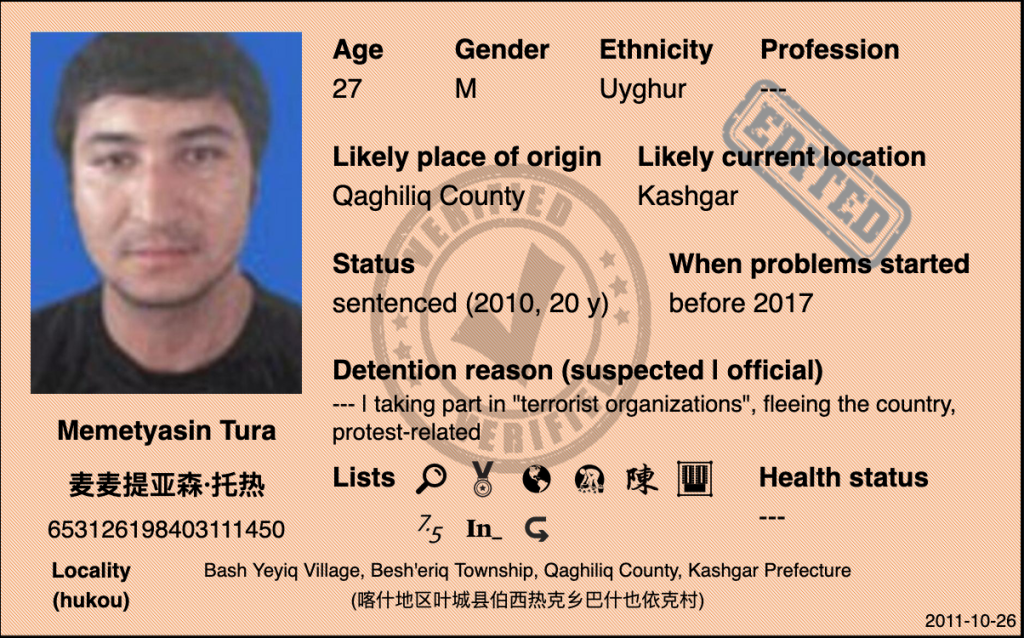
Memetyasin Tura (likely “Turik Muhamed” in some reports), now 42 years old, is from Bash Yeyiq Village in Qaghiliq County. After being extradited, he was sentenced to 20 years and transferred to an unspecified prison. There is currently no other information about him or his well-being.
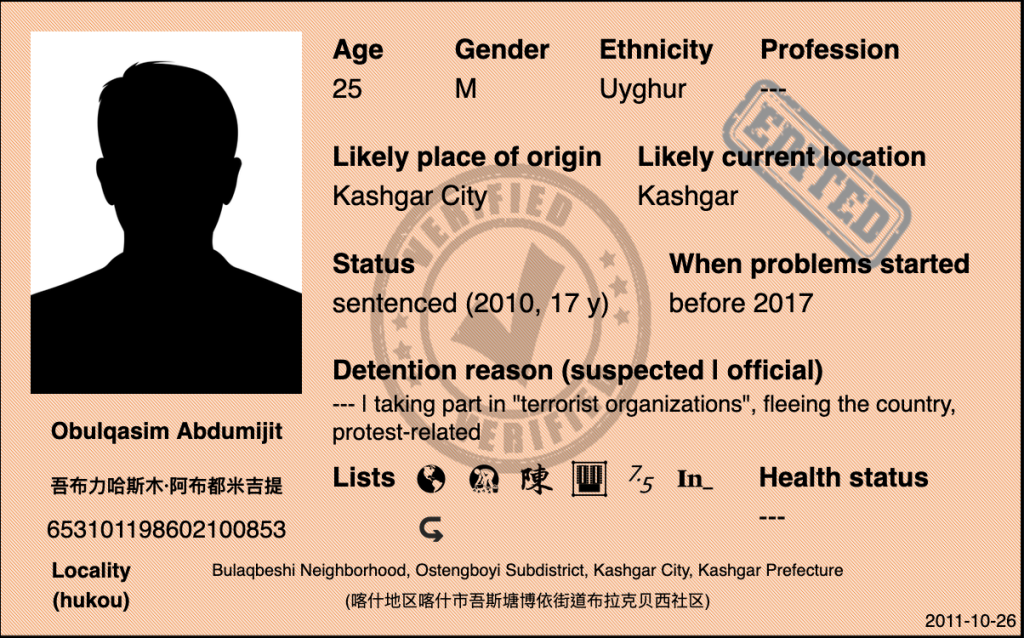
Obulqasim Abdumijit (likely “Abdullah Kasim” in some reports), now 40 years old, is from Kashgar City’s Bulaqbeshi Neighborhood. He was sentenced to 17 years at an unknown prison, with a scheduled release date of December 19, 2026. Barring any incidents, he should be out of prison by the end of this year.
In addition to the prisoners documented above, there is also the case of Ekber Tuniyaz, whose identity we have not been able to confirm but who was reported as among those deported, by both Amnesty International and Radio Free Asia. His case stands out as particularly egregious, since he had a valid Cambodian visa and was already in the country when the July 5 unrest took place, and would later act as a translator for the deported Uyghur group. It is not clear what prison term he was given.
We are also aware that several people remain unaccounted for. While Amnesty International has published the (presumably nearly complete) list of 20, some of the names may be shortened or corrupted, and have been difficult to reconcile with other reporting and internal records. The old prisoners list, while much more detailed and coming directly from the system, only accounts for 11 of the detainees and leaves out, among others, those four who were sentenced to life. Consequently, we will continue to keep this case open and update this article should new information or clarifications come in.